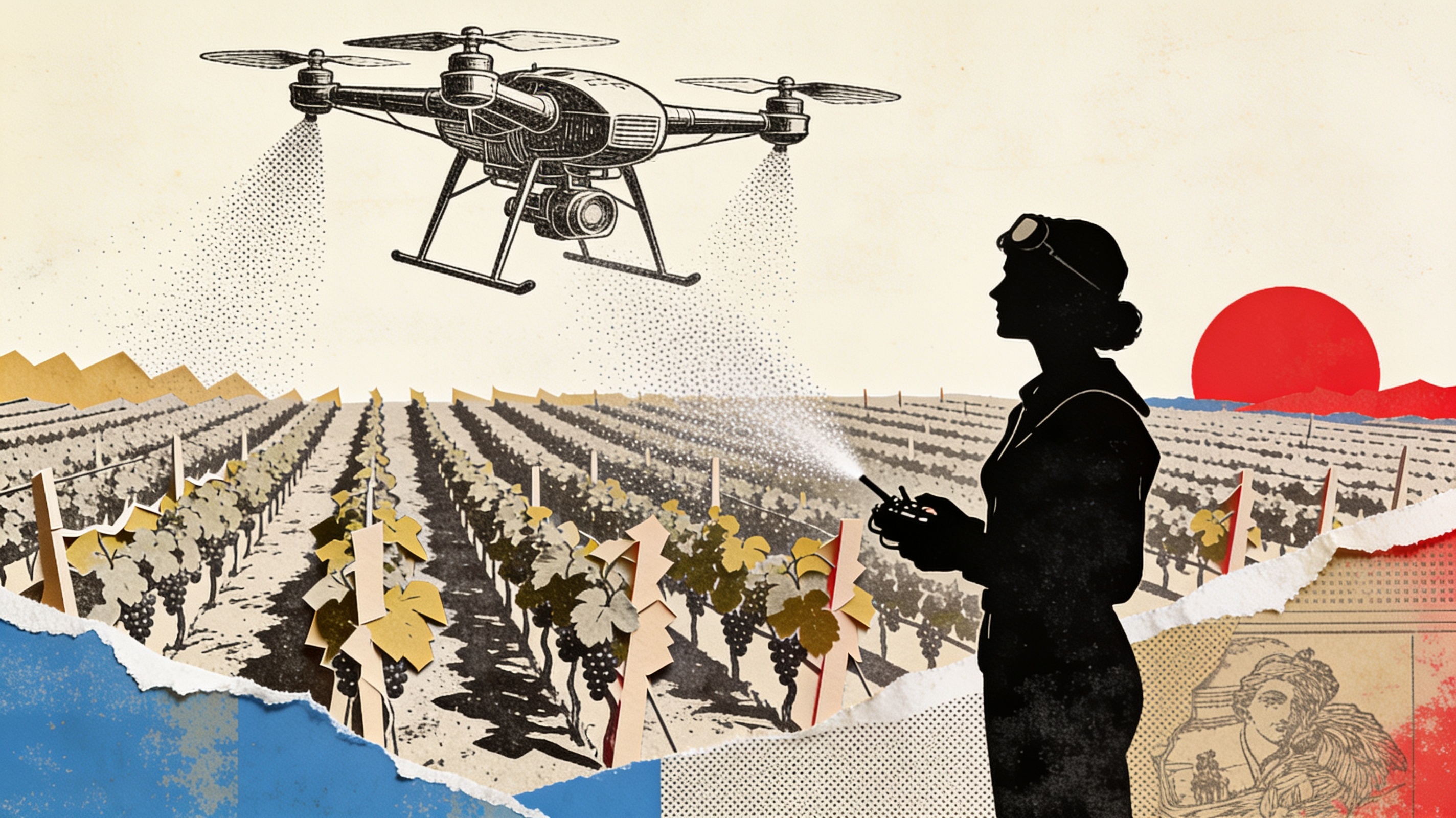
Sunita Pawar’s commute is a motorcycle ride between grape farms with a ten-kilogram drone strapped to the pillion. By 7 a.m. she has mapped her first vineyard; by noon she has sprayed forty acres with the precision of a calligrapher; by evening she has earned what a month of farm labour paid her three years ago. She is twenty-eight, has a commercial drone licence with her photo laminated inside, and is training her sister.
She is also, depending on which ministry is counting, one of roughly a thousand “drone didis” in Maharashtra alone — the visible edge of the fastest agricultural technology adoption India has managed since the tubewell.
Why drones, why here
Indian farms average barely a hectare, which for decades made mechanisation arithmetic impossible: no smallholder buys a tractor-mounted sprayer for a plot the size of a football field. Drones dissolve the arithmetic. One machine serves a hundred farms; the farmer buys a service, not an asset — spraying at forty rupees a litre-acre, crop-health maps for the price of a cinema ticket.
The labour math is even starker. Manual spraying is the most dangerous routine job in Indian agriculture — pesticide exposure, heat, snakebite. A drone does an acre in seven minutes with a tenth of the chemical drift, and the person holding the controller stands at the field’s edge, upwind.
The tractor never fit the Indian farm. The drone doesn’t have to fit; it flies over.
The women in the pilot’s seat
The programme that trained Sunita — self-help-group women, subsidised machines, guaranteed early contracts through cooperatives — succeeded for an unfashionable reason: trust. A vineyard owner who would haggle with an outside vendor signs a season’s contract with the SHG network his wife has banked with for a decade. The drone arrived wearing a familiar face.
The second-order effects are compounding. Pilots become data collectors; the imagery they gather feeds crop-insurance claims that once took a season to verify and now take a week. Agronomists buy the maps. Banks buy the yield estimates.
The ceiling and the sky
The bottlenecks are prosaic — battery cycles in 45-degree heat, spare parts that still cross an ocean, insurance products younger than the machines they cover. Nashik’s pilots trade fixes in a WhatsApp group at the speed no manual has matched.
Sunita’s ambition, stated flatly over chai: a fleet of five, her sister as operations head, and the district’s first all-women drone-services company. The paperwork, she notes, is already filed.