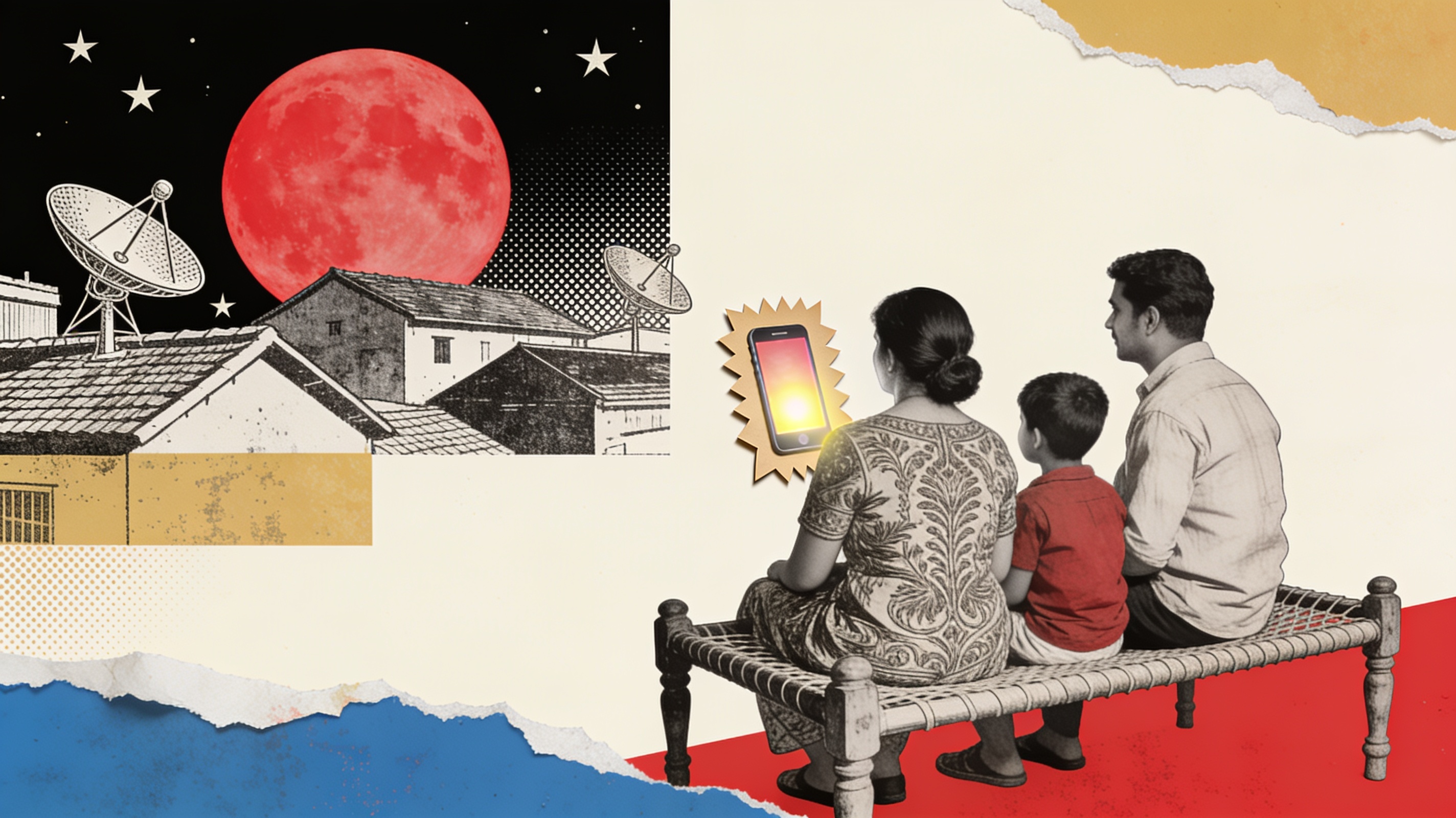
The most-watched Indian streaming debut of last quarter was not the spy thriller with the Bombay star and the Berlin shoot. It was a Bhojpuri family drama, produced for less than the thriller’s costume budget, shot in Ballia district, and watched — by the platform’s own count — by more households in its first week than any original in the service’s history.
The executives were surprised. The audience was not. It had been waiting a decade to be counted.
The market the dashboards missed
Streaming’s first Indian decade was built on a convenient fiction: that the addressable market was the English-and-Hindi metro viewer, roughly the audience that already paid for multiplex tickets. Everything about the products said so — the interfaces, the thumbnails, the commissioning.
Then smartphone data became the cheapest on earth, UPI made a forty-rupee subscription frictionless, and the dashboards began recording an inconvenient truth: watch-time in the Hindi belt’s dialect markets was growing at triple the metro rate, on content the platforms had licensed as an afterthought.
Bhojpuri alone commands a native audience larger than Germany’s population. Haryanvi, Rajasthani, Chhattisgarhi, and Maithili add an audience the size of another Europe. None of it was being served by anything better than pirated YouTube uploads and a film industry the mainstream press covered only to mock.
The next billion viewers were never going to arrive speaking the platforms’ language. The platforms are learning to speak theirs.
The new commissioning map
The correction is now visible in the slates. Every major platform runs a dedicated dialect-originals division. Micro-studios in Patna, Rohtak, and Jaipur — founded by creators who built million-subscriber YouTube channels with two cameras and a courtyard — are signing multi-season deals. The economics are irresistible: a dialect original costs a tenth of a metro prestige drama and retains subscribers the prestige drama never reached.
The craft is rising with the money. The new Bhojpuri wave has its own auteurs, its festival submissions, and — the surest sign of arrival — its own arguments about selling out.
What changes upstream
The deeper shift is who gets to be the default audience. For a century, mass Indian entertainment has been made in a handful of cities and exported inward. The streaming map inverts the flow: the courtyard in Ballia is no longer the last stop on the distribution chain. It is the commissioning brief.