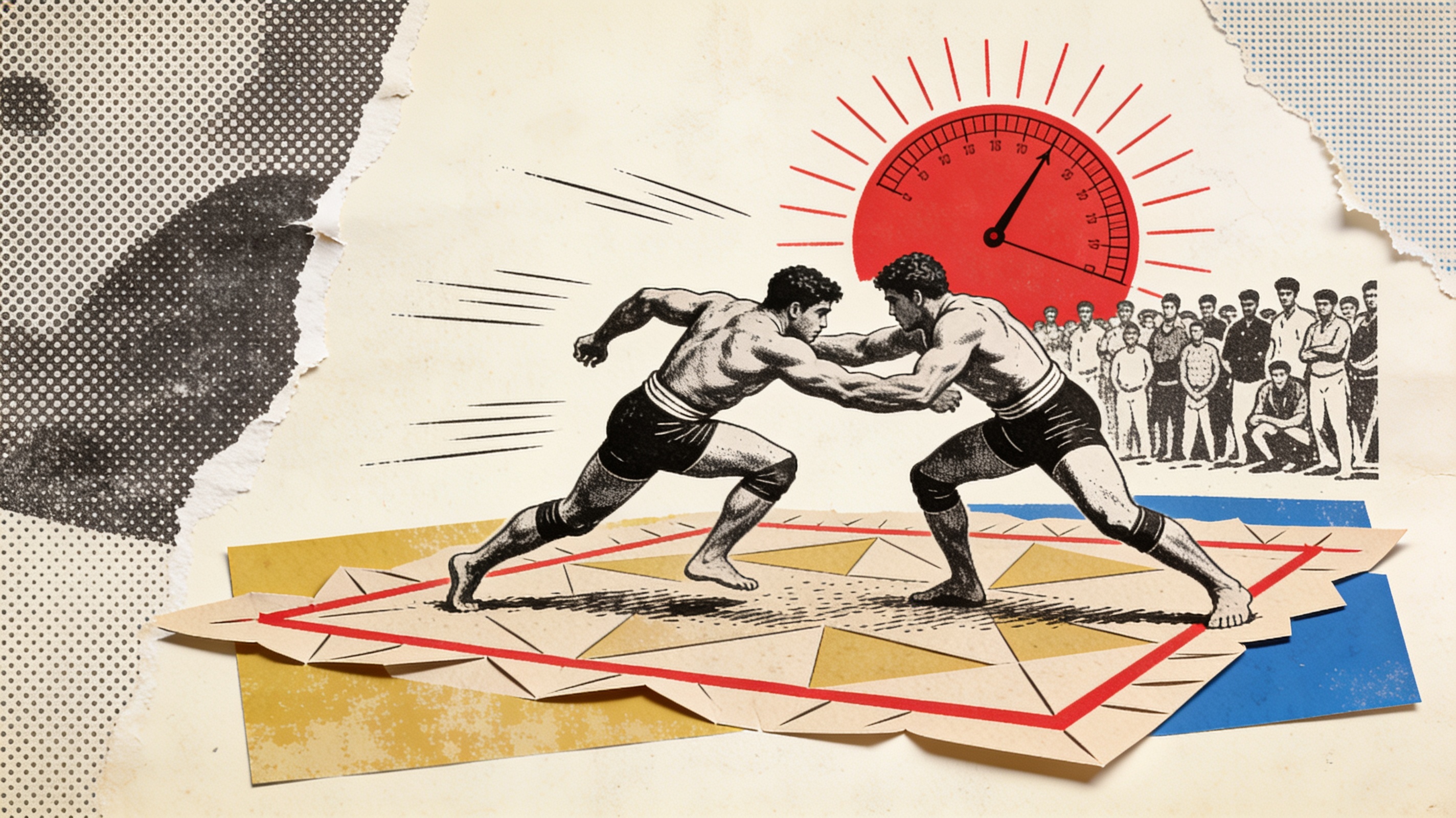
The most-watched non-cricket sporting moment in India last year lasted eleven seconds. A raider named from a village in Haryana crossed the line, held his breath, touched three defenders, and returned — and forty million television sets exhaled with him.
Kabaddi was supposed to be the sport India outgrew. Instead it has become the country’s second-most-valuable sports property, a league whose franchise valuations have grown twentyfold in a decade, and — in the strangest twist — an export.
The league that read India correctly
The professional league’s founders understood something the marketers of imported sports never did: India’s sporting heart lives in its small towns, and small towns do not need a sport explained to them that they invented. Every child in Uttar Pradesh, Maharashtra, and Tamil Nadu has played kabaddi barefoot. The league did not have to build a market. It had to build a stage.
The stagecraft borrowed shamelessly from cricket’s playbook — city franchises, player auctions, prime-time slots — but the economics are kabaddi’s own. A season costs a fraction of a cricket league to produce. A raid resolves in under thirty seconds, a rhythm made for both broadcast and the vertical video where the league now earns half its audience.
Cricket is India’s religion. Kabaddi is its mother tongue.
The player pipeline
The money has redrawn rural sporting ambition. Academy mats have replaced akhara mud from Sonipat to Salem. A top raider now earns more in a season than his family’s farm earns in twenty years, and state governments that once listed kabaddi under “cultural activities” now fund it as employment policy.
The stars are a new kind of Indian celebrity: village-raised, vegetarian-brand-endorsing, mobbed in tier-3 towns where cricketers are only ever seen on screens.
The away leg
The genuinely new chapter is international. Leagues seeded by the Indian model now run in Iran, Kenya, and the UK; the world championship has doubled its entrants; and the campaign to put kabaddi on the Asian Games’ permanent marquee — and eventually further — is run with the seriousness of a trade negotiation.
The sport that needed no equipment, no grass, and no translation is discovering it may not need a passport either. The raider crosses the line, holds his breath, and the line keeps moving outward.