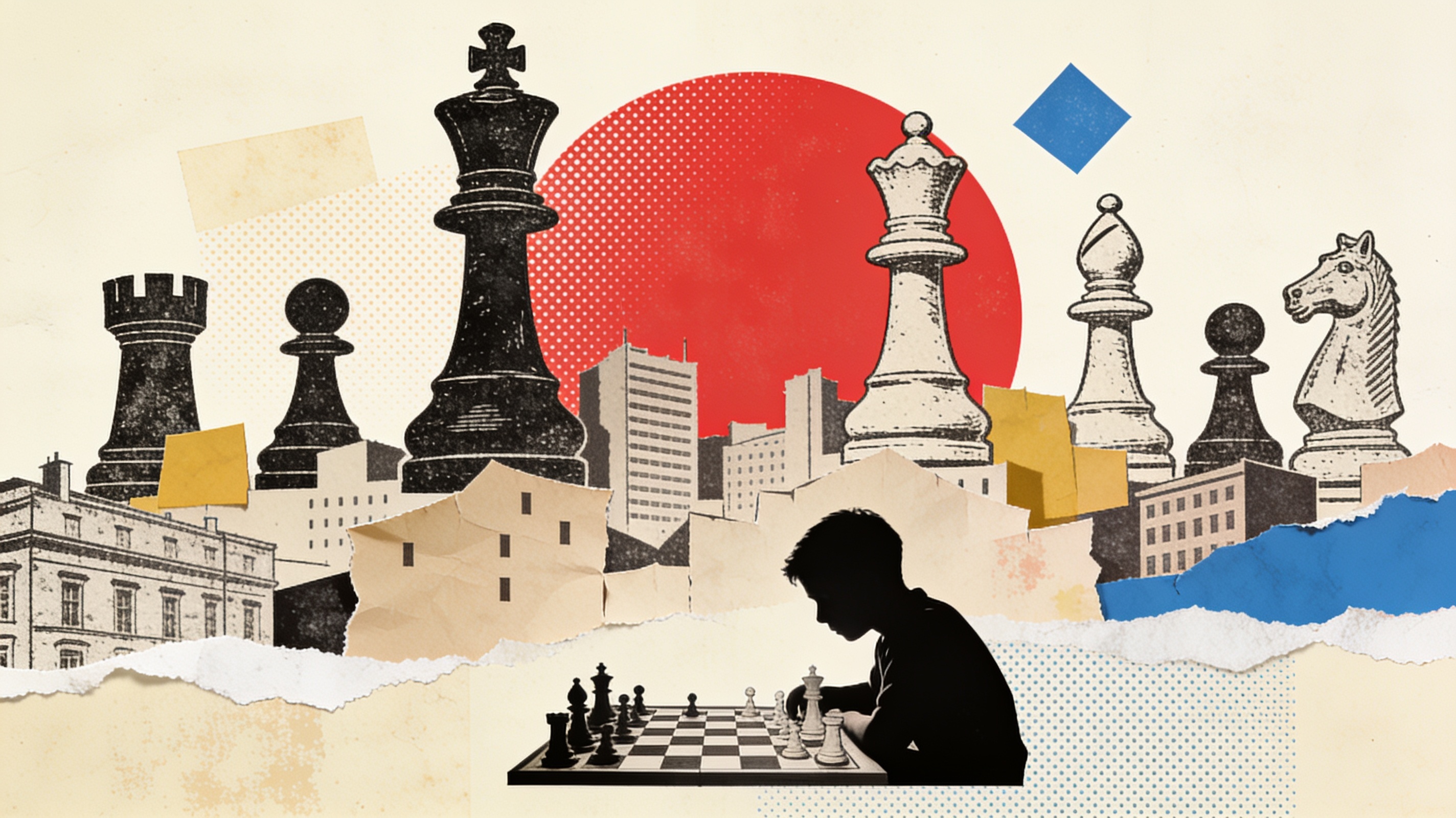
In a converted marriage hall in Chennai’s Nungambakkam, forty children are silently destroying each other. The youngest is six. The room’s only sounds are chess clocks and ceiling fans. On the wall hangs a portrait of Viswanathan Anand, watching over the factory he accidentally founded.
India produced four grandmasters in its first fifty years of chess. It now produces one roughly every six weeks, and the median age keeps falling. The world championship has had an Indian in its final three times running. Something happened here, and the rest of the chess world has stopped calling it luck.
The Anand effect, compounded
Every chess nation has a hero. What India built was a hero with infrastructure. The academies that opened in Anand’s shadow through the 2010s — Chennai first, then Nagpur, Kolkata, Ahmedabad — did something the Soviet school never had to: they made elite training compatible with Indian family economics. Group coaching brought the monthly cost below a school fee. Streaming brought grandmaster analysis into two-room homes.
Then the pandemic moved tournaments online, and a generation that could not afford European circuit travel suddenly played two hundred rated games a year from their bedrooms.
The Soviet school had state salaries. The Indian school has parents, broadband, and a six-week production cycle.
What the pipeline looks like now
The current wave is deeper than its stars. Behind the household names sit a hundred players rated above 2500, a national league whose franchise auctions now make sports-page headlines, and — the number that most alarms rival federations — the world’s largest under-twelve rating pool by an enormous margin.
The economics have inverted, too. Sponsors who once treated chess as charity now treat it as media. A teenager with a title run can earn more from streaming and endorsements than from prize funds, which means the pipeline no longer leaks its talent to engineering entrance exams at fifteen.
The next move
The federations of Europe have begun sending delegations to Chennai to study the model, which is its own kind of checkmate. What they find is not a secret. It is a culture that decided, sometime in the last decade, that chess was not a hobby that interrupted studies but a career that rewarded exactly the things Indian families already believed in: discipline, memory, and starting absurdly young.
The marriage hall in Nungambakkam has a waiting list of four hundred names. The generation after the Gukesh generation is already seated, silently, at the board.