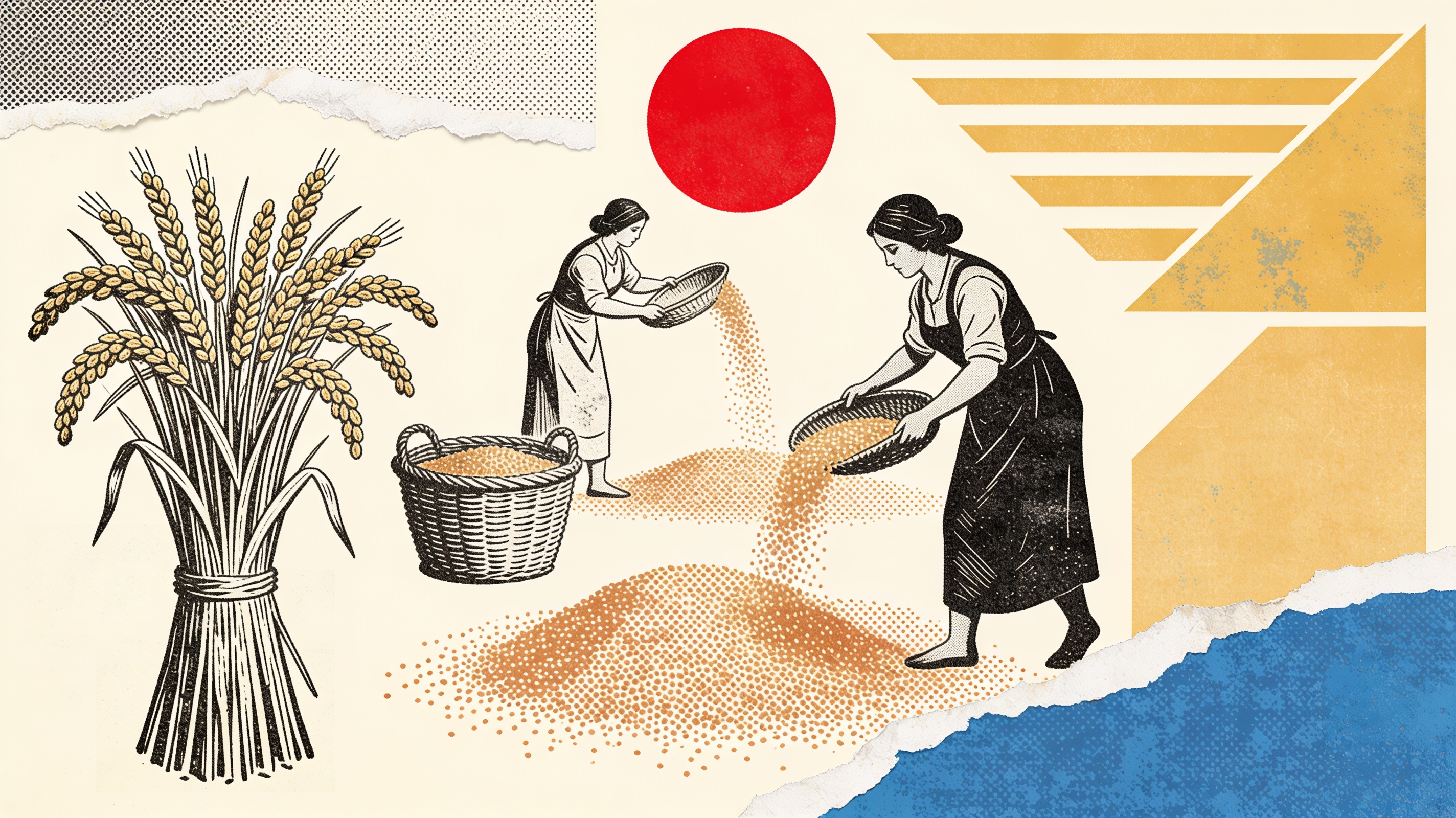
The tasting menu at one of Bengaluru’s hardest reservations ends with a ragi mudde — the dense finger-millet ball that farm labourers in old Mysore ate for lunch because it kept hunger away until dark. It arrives with a jus, and a story, and it costs more than a quintal of the grain it is made from.
It is easy to be cynical about this. It is more interesting to notice what it signals: the fourth-oldest food in India has completed the full arc from staple to stigma to status.
How a staple became a stigma
Millets fed the subcontinent for four millennia; they are drought-hardy, grow on poor soil, and pack more iron and fibre than the cereals that replaced them. What dethroned them was policy, not preference. The Green Revolution’s procurement machinery — subsidised seed, assured prices, ration-shop distribution — was built for rice and wheat. Within a generation, millets became what you ate when you could not afford better, and the acreage collapsed by half.
The stigma outlived the economics. Ask anyone over fifty from a farming district: bajra roti was what grandmothers made, and leaving it behind was what progress tasted like.
Nothing disappears in Indian food. It waits for the wheel to turn.
The wheel turns
Three forces are turning it. Cardiologists and diabetologists, staring at the subcontinent’s metabolic crisis, have been prescribing exactly the low-glycaemic grains policy abandoned. Climate planners see a crop that needs a quarter of rice’s water surviving on rain that no longer arrives on schedule. And the culture caught up: the International Year of Millets put shree anna in the national vocabulary, ration shops in several states now stock them, and startup shelves groan with millet dosa batter, millet pasta, and millet beer of defensible quality.
The acreage has begun climbing for the first time in sixty years. More telling: the price premium has inverted. Ragi now sells above wheat in urban markets — which changes what a farmer in Chitradurga plants next season.
The mudde test
The revival’s honest test is not the tasting menu; it is whether the grain returns to everyday plates without the artisanal markup. The signs are quietly good. School-meal programmes in five states have added millets twice a week. Flour mills report household ragi sales doubling. And in Bengaluru’s darshinis, the ragi mudde never left — twenty rupees, no jus, keeps hunger away until dark, same as it did for four thousand years.