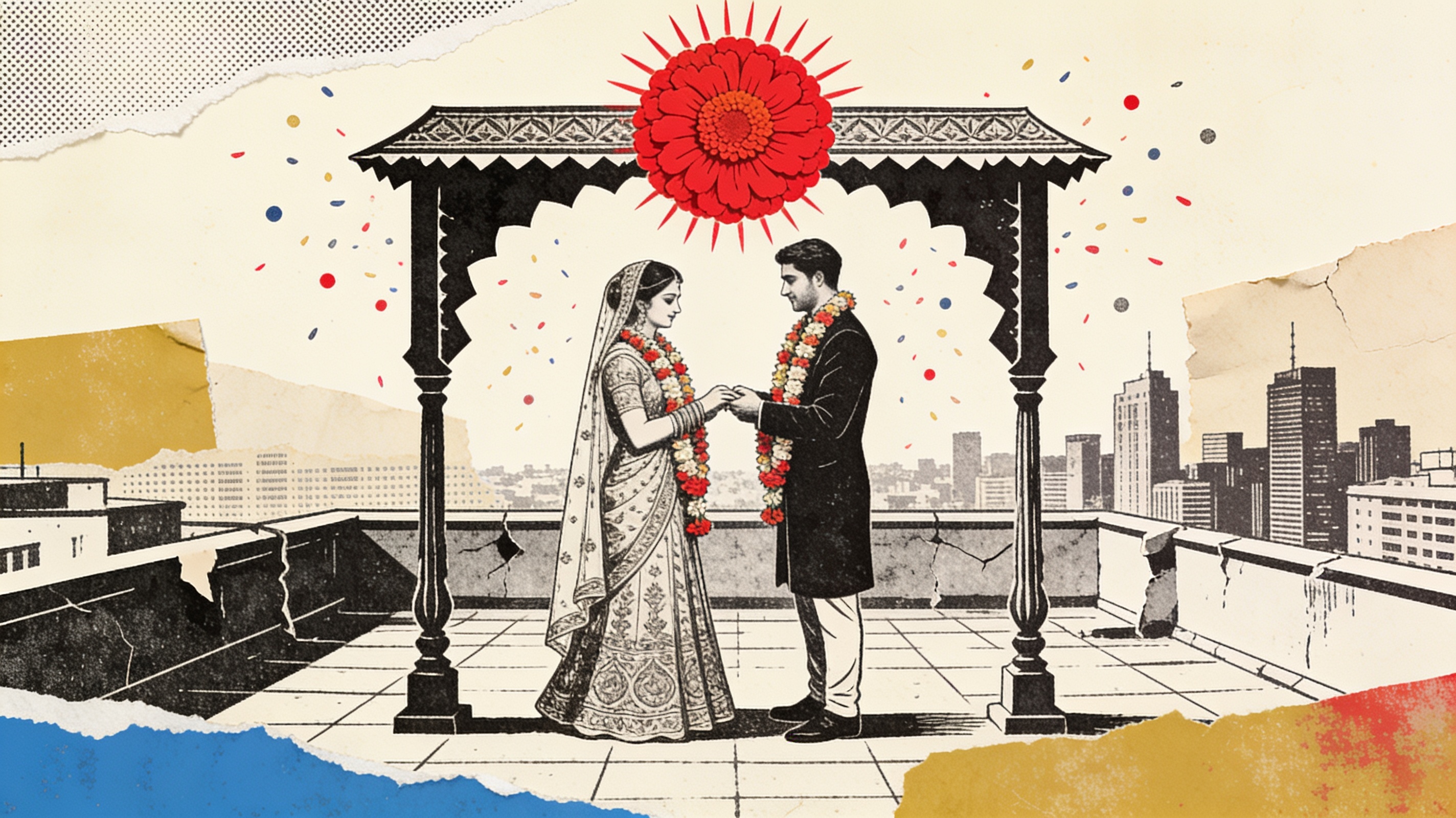
The most radical wedding Ritika Malhotra attended last year had forty guests. There was one venue, one outfit change, no drone, and a dinner the bride’s family actually ate. The couple spent what a Delhi banquet hall charges for flowers, and put the difference into a flat in Gurugram.
Five years ago this would have required an explanation, possibly a family council. Today it has a name — the “micro shaadi” — a hashtag economy, and, according to the wedding-services platforms that track such things, the fastest-growing booking category in the business.
The arithmetic of enough
The great Indian wedding has always been a transfer mechanism disguised as a party: of status, of savings, of daughters between households and debt between generations. Estimates put the industry north of ₹10 lakh crore a year — the country’s fourth-largest, bigger than pharma. What is changing is not the institution but its unit economics. Couples marrying later, paying themselves, and measuring the spend against a home deposit have started asking the question no baraat has ever asked: what is this for?
The wedding was a message to the community. The couple has started writing it themselves.
An industry renegotiates
The supply side has read the room faster than the aunties have. Banquet halls that once sold five-hundred-plate minimums now advertise “intimate packages.” Planners who built careers on scale have rebranded around “curation.” The photographer’s album has shrunk; the videographer’s film has lengthened — the artefact now made for the couple’s own memory rather than the community’s inspection.
The correction is uneven, and honest people in the industry admit it. The big fat wedding is not dying; it is bifurcating. The top of the market — the destination fortress weddings that airlift four hundred guests to Udaipur or Phuket — grows more baroque every season, precisely because it now signals something scarcer.
What survives
Sociologists who study Indian marriage point out that every generation has renegotiated the wedding and every generation has kept it. The ceremony absorbs whatever the era values: in the nineties, VHS and gold; in the 2010s, hashtags and drone shots; now, a kind of conspicuous restraint.
The forty-guest wedding still had a pandit, still had a weeping mother, still had the moment the room went quiet. The message of a wedding, it turns out, was never in the plate count.