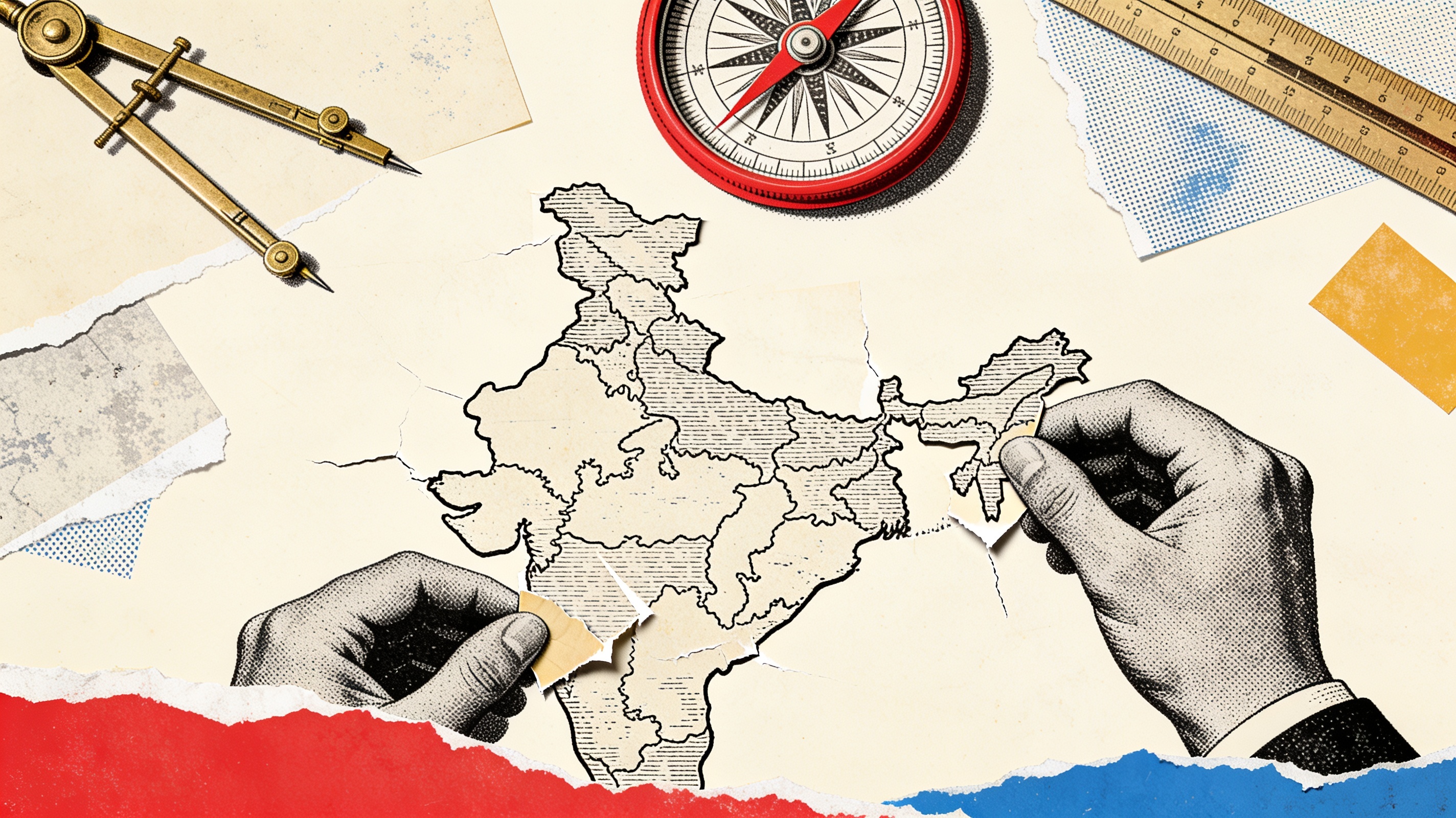
Four words move more money in India than any central bank announcement: normal monsoon this year. The June-to-September rains water half the country’s farmland directly, set rural demand for everything from tractors to gold, and decide whether inflation stays polite. For a century, predicting them has been the hardest problem in operational meteorology. The monsoon is not one system but an argument between several — the Indian Ocean Dipole, the El Niño cycle, Himalayan snow cover, and the Bay of Bengal’s moods — and it has humiliated every model built to tame it.
Now the India Meteorological Department is rebuilding the machine, and for the first time, the rebuild is going neuron by neuron.
From physics to hybrids
The traditional approach simulates the atmosphere from first principles on supercomputers in Pune and Noida. The new system layers machine learning over the physics: models trained on 120 years of rainfall records, satellite archives, and — in a first for any national forecaster — soil-moisture data crowdsourced from a million connected farm sensors.
The hybrid’s early results have startled its own builders. Block-level forecasts, once a ten-day fiction, now hold useful skill at three weeks. The onset date, historically missed by a week in either direction, has been called within two days for three consecutive seasons.
The monsoon is an argument between oceans. The new models are learning to hear all the voices at once.
Why block-level matters
A national forecast is a headline; a block-level forecast is a decision. Tell a Vidarbha cotton farmer that rains arrive June 8th rather than “early June,” and sowing dates, credit cycles, and insurance premiums all sharpen. State disaster agencies now pre-position pumps against a fourteen-day flood outlook. Power utilities schedule hydro releases against a forecast that was, within living memory, closer to astrology.
The economics compound quietly. Researchers estimate every percentage point of added forecast skill is worth thousands of crores in avoided losses — a return that makes the supercomputer procurement line look like the cheapest infrastructure in the Union budget.
The humility clause
The scientists rebuilding the machine are careful to say what it cannot do. Climate change is making the monsoon spikier — longer dry spells punctured by cloudbursts — and a model trained on the past century is learning from a monsoon that no longer quite exists. The machine must keep learning as fast as the atmosphere drifts.
Which is why the department’s motto for the project, printed on a poster in the Pune modelling hall, reads less like triumph than like a farmer’s prayer: better every season.