Every seat in the Lok Sabha is supposed to represent roughly the same number of Indians. That principle, frozen in place since 1976, is approaching its thaw — and with it comes the most delicate redistricting exercise any democracy has ever attempted.
The arithmetic is brutally simple. India’s southern states slowed their population growth decades before the northern heartland did. Reward population with seats, and the states that delivered on family planning lose parliamentary weight to the states that did not. Punish population, and the principle of equal representation dissolves.
A freeze with an expiry date
The 42nd Amendment froze seat allocation at 1971 census figures precisely to avoid this fight. The freeze was extended in 2001, and its current horizon has turned a constitutional footnote into the most closely watched clock in Indian politics. Chief ministers who agree on nothing else have found common cause in demanding the status quo. Union governments of every persuasion have discovered the virtue of ambiguity.
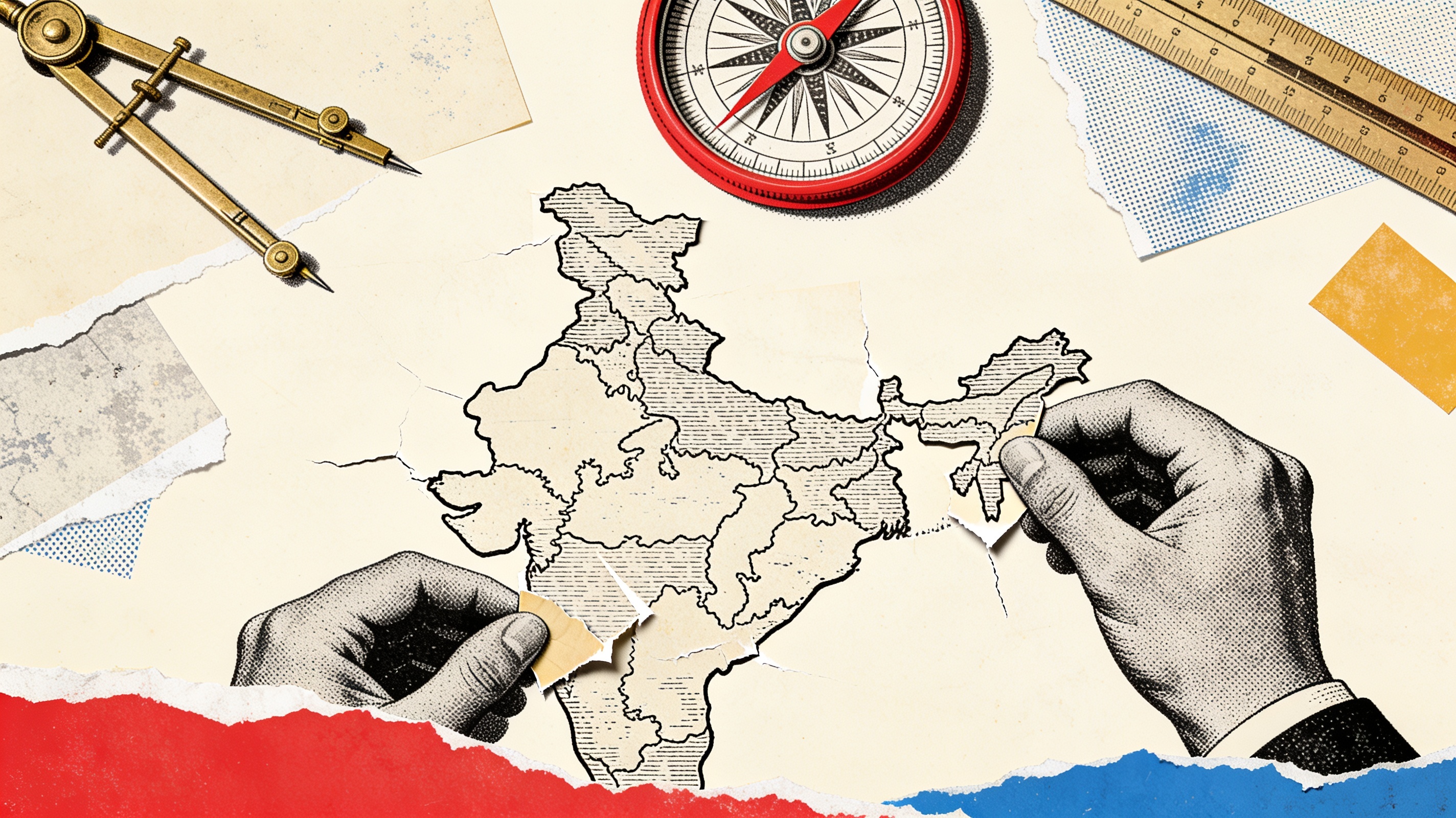
No formula can add seats for one state without subtracting relative power from another. That is not a design flaw. That is what a map is.
The proposals circulating in Delhi’s think tanks read like attempts to square a circle: expand the Lok Sabha so no state loses seats in absolute terms; weight representation partly by population and partly by performance; create an upper-house counterbalance for the states that lose ground. Each solves one problem by creating a newer, stranger one.
What the states are actually saying
Spend a week in Chennai or Thiruvananthapuram and the argument sharpens. Southern leaders do not frame delimitation as arithmetic; they frame it as a breach of contract. Their states industrialised, educated, and slowed their growth on the understanding that the federation would not penalise success. Northern leaders counter with a principle older than the republic: one citizen, one equally weighted vote.
Both arguments are correct. That is what makes the map so hard to draw.
The long game
The quiet consensus among constitutional scholars is that the eventual settlement will be a package, not a formula — seats, revenue-sharing, and federal structure negotiated together, the way the republic’s founders would have recognised. The louder consensus among politicians is that whoever holds the pen when the freeze ends will shape Indian politics for a half-century.
The census enumerators are already in the field. The map is coming. The only question is whether India redraws it with a scalpel or a cleaver.